Three Bags, No Faff: Why a Kit Beats a Collection

Photo: Julian Herzog (Website), CC BY 4.0, via Wikimedia Commons
Somewhere in every British hallway there is a bag doing nothing. Possibly two. Probably a canvas tote from a conference in 2019, a nylon rucksack with a broken zip pull, and a leather satchel bought in a fit of optimism that has never once carried a laptop. We are, as a nation, quite good at buying bags and quite bad at choosing them.
The fix isn't more storage. It's a smaller, sharper kit. Three bags, each with a clear job, each good enough that you don't resent using it. That's the whole argument, and it holds up better the longer you live with it.
Why three, and not one or nine
One bag sounds noble until you turn up to a wedding with a scuffed commuter rucksack, or spend a Saturday in the Peak District with a leather briefcase. Nine bags sounds flexible until you realise you're choosing between near-identical options every morning and defaulting to the same one anyway.
Three gives you range without noise: a daily carry, a weather-ready utility bag, and something clean for the occasions that call for it. Everything else is a duplicate wearing a different colour.
The daily carry: judge it on a Tuesday, not a photoshoot
Your daily bag is the one that goes to the office, the pub, the gym and the supermarket on the way home. It should be the least interesting bag you own and the one you'd replace first if it broke.
Be honest about volume. Most commuters need somewhere between 12 and 20 litres — a 13-inch laptop, a charger, a water bottle, a light layer and a paperback. If you're regularly carrying a gym kit plus a laptop plus lunch, you're at the top of that range or you need to accept that the gym bag is a separate thing.
Look at the straps before the fabric. A webbing shoulder strap with a sliding pad is more comfortable on a twenty-minute walk than a beautiful flat leather strap that digs in at the collarbone. If it's a backpack, check that the shoulder straps are shaped rather than straight — cheap straight straps never break in.
The utility bag: the one that gets rained on
This is the bag that goes to the tip, the festival, the muddy walk, the bike ride and the supermarket run in horizontal drizzle. It should be bigger than your daily carry — think 25 to 40 litres — and it should not be precious.
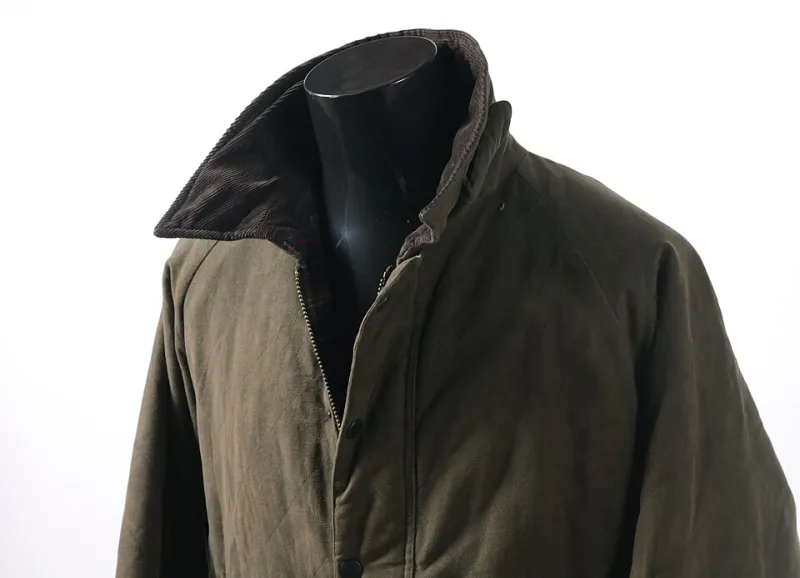
Waxed cotton is lovely here if you accept that it needs re-waxing every year or two and will mark where it creases. Recycled nylon is lighter, cheaper to live with and genuinely waterproof rather than showerproof, though it looks more technical and less like something you'd carry into a nice pub. Either works. What matters is that the closure keeps water out of the main compartment rather than funnelling it in — a flap with a decent overhang beats an exposed zip every time.
External pockets are the point of this bag. You want somewhere to throw a wet lead, a bike lock or a squashed croissant without opening the whole thing in the rain.
The occasion bag: quiet, clean, small
This one gets used maybe twenty times a year, and that's fine. It needs to look right with a coat at a wedding, hold a phone, a wallet, keys and a paperback, and make no noise. Avoid anything with a chain that rattles, a zip that catches on a jacket sleeve, or hardware so shiny it looks borrowed.
Eight to twelve litres is plenty. A single main compartment with one interior slip pocket beats a bag with five pockets that will all be empty.
The four numbers that decide everything
Before you buy anything, get these straight. They'll rule out about half the bags you're considering.
Capacity in litres. Vague marketing copy is the enemy here. If a listing won't state a figure, assume it's small. A 10-litre bag holds a surprising amount of flat things and almost no shoes.
Strap drop. Measure from the top of the strap arc to the top edge of the bag. Under 20cm and it wedges under your armpit when you're wearing a winter coat. Over 30cm and it swings at your hip and bangs your thigh on every step. Twenty to twenty-five is the sweet spot for most adults in a coat.
Closure type. Zips are fast and fine until they're not. Flaps with buckles or magnets are slower and weather-friendly. Drawstrings are charming and terrible for security in a crowd. Match the closure to how often you're standing in the rain versus how often you're reaching for a card on a busy train.
Empty weight. Weigh it before you commit. A 1.2kg empty bag becomes 3kg once you've filled it with the usual clutter, and that's before a laptop. Leather is heavy. That's not a flaw, but you should know you're buying it.
The duplicate test
Before adding a fourth bag, run it through this. If it fails two or more, you're buying a variation, not a tool.
- Does it overlap more than 70 per cent with a bag you already own, in both capacity and use case?
- Would you actually carry it on a wet Tuesday, or only in good weather?
- Does it solve a problem you've hit at least four times in the last month?
- Could you name the bag it replaces, by name, and mean it?
- Does it fit a laptop, a coat and a water bottle at the same time, if that's what your days look like?
- Are the straps comfortable with a winter coat on, not just a t-shirt?
- Would you still want it in three years, when the trend that made you notice it has moved on?
Honest answers here save a lot of money and a lot of hallway space.
The retirement plan
When a bag stops doing its job, get rid of it. Repair it if the fix is cheap — a new zip pull, a re-stitched strap, a re-wax — and pass it on if it isn't. A kit only works if the dead weight goes.
Three bags, chosen properly, will outlast a dozen chosen quickly. That's not minimalism for its own sake. It's just what happens when you stop buying options and start buying tools.