The Material Decides Everything: Waxed Cotton, Recycled Nylon and Full-Grain Leather Put to the British Test
Photo: Basile Morin, CC BY-SA 4.0, via Wikimedia Commons
You can change the shape of a bag. You can add a pocket, swap the hardware, pick a different lining. What you cannot change is the material, and the material is the decision you live with every day for the next five years. It determines how the thing feels on your shoulder, how it behaves in a downpour, whether it can be mended, and whether it still looks deliberate rather than tired by year three.
Three materials do most of the work in everyday carry: waxed cotton, recycled nylon and full-grain leather. Each has a devoted following and a set of claims attached. Here is what actually matters.
The test British weather sets
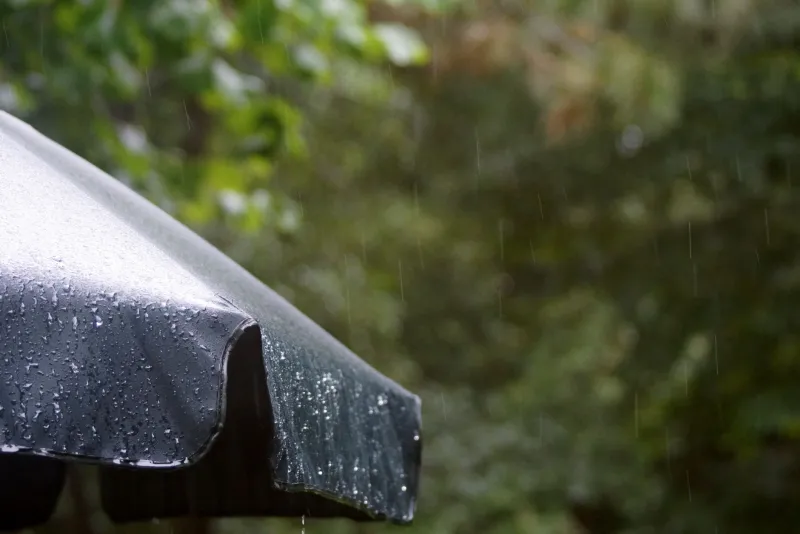
Rain in this country rarely arrives vertically. It comes sideways at a bus stop, as a fine mist that soaks gradually, as a sudden downpour between the station and the office door. Add to that gritting salt in January, humidity that hovers near saturation, a damp hallway, a radiator that dries everything too fast, and four seasons in a single walk to lunch. A material that performs in a laboratory does not necessarily perform in Bolton in February.
Waxed cotton: the one that improves with age
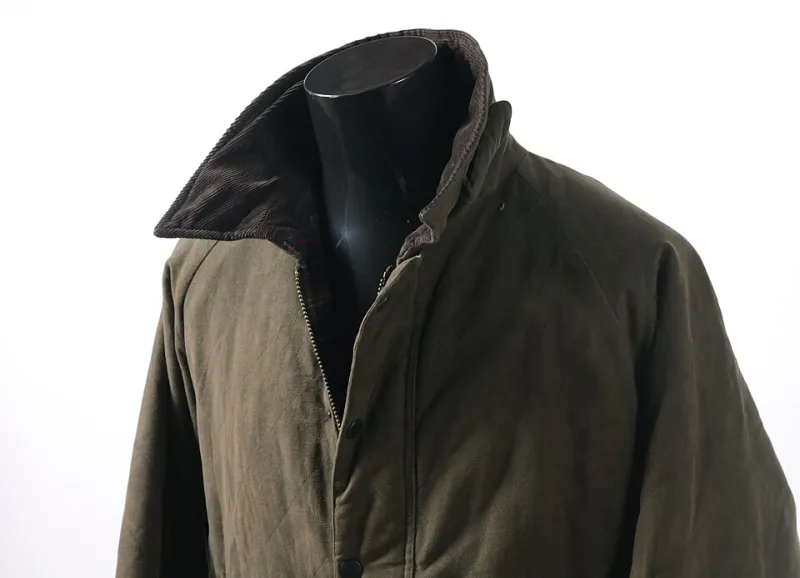
Waxed cotton is the traditionalist's choice and the most characterful of the three. The wax finish beads water convincingly at first, and a well-made bag will keep a laptop dry through steady rain for an hour or so. The weaknesses are predictable: seams, the edge of a flap and the base are where water gets in, so look for bound or taped seams and a reinforced base rather than trusting the fabric alone.
It is mid-weight, breathable and abrasion-resistant, and it develops a genuine patina — creases at the folds, a slight sheen where your hand goes. The honest drawback is transfer. New wax can mark a pale coat or a car seat, so give a bag a few days on a hook before you wear it against linen, and re-wax before the finish goes patchy rather than after.
Repair is straightforward: a patch, a stitch, a fresh tin of wax. On sustainability, cotton plus wax sounds benign, but the wax itself is often paraffin-based, and earnest claims about natural finishes should be read carefully.
Care routine: wipe with a cold, damp cloth, never detergent, never a washing machine. Re-wax once a year with a proper tin and a hairdryer on low. Store it dry, away from heat.
Recycled nylon: the pragmatic default
The most practical material for a wet commute, and the one we would recommend to most people most of the time. A coated or laminated nylon is effectively waterproof, weighs almost nothing, and resists abrasion better than the fabric's light hand suggests. It also wipes clean in ten seconds, which matters more than anyone admits.
The trade-off is longevity of the coating. Polyurethane coatings degrade, especially with UV and repeated flexing, and a bag that has been used hard for six or seven years may start to delaminate at the corners. The fabric itself is rarely the failure point; the finish is. Nylon is also not very repairable in the traditional sense — you are more likely to replace than restore.
On sustainability, recycled content is real and verifiable, usually under a certification scheme, but it is not the whole story. Recycled nylon still sheds microfibres, the coating is typically a virgin polymer, and a bag that lasts six years rather than fifteen has its own footprint. The most sustainable thing you can do with a nylon bag is use it until it genuinely fails.
Care routine: wipe with mild soapy water, rinse, air dry away from radiators. Re-proof with a spray每年 — sorry, once a year is plenty. Never tumble dry.
Full-grain leather: the long relationship
Heavy, expensive, occasionally fussy, and still the best answer if you want one bag for a decade. Full-grain leather is the outermost layer of the hide with the grain intact — the strongest part, and the part that takes a patina rather than a scuff. It handles drizzle well when properly finished, though it will mark in a proper soaking, and untreated or vegetable-tanned leather should be kept away from a downpour entirely.
Repairability is where it wins outright. A good leather bag can be re-stitched, re-lined, have its straps replaced and its hardware swapped by a competent cobbler or leatherworker. That is a genuinely different proposition from binning a bag because a zip has gone.
Sustainability is messier than the marketing suggests. Hides are a by-product of the meat industry, which is either a sensible use of waste or an uncomfortable dependency depending on your view, and tanning is chemically intensive. Certifications on tannery practice and vegetable-tanned options are worth asking about, and vague language about eco leather usually means neither.
Care routine: blot rain rather than rubbing it, condition twice a year with a neutral balm, keep it off radiators, and store it in a dust bag rather than a plastic one.
At a glance
| Material | Water resistance | Weight | Patina | Repairability | Care burden |
|---|---|---|---|---|---|
| Waxed cotton | Good, not waterproof | Medium | Excellent | High | Annual re-wax |
| Recycled nylon | Excellent | Light | Minimal | Low | Occasional wipe |
| Full-grain leather | Fair to good | Heavy | Excellent | Very high | Twice-yearly conditioning |
Which one for which job
- The daily commute, any weather: recycled nylon. Light, dry, wipe-clean, and you will not mind it being rained on.
- Weekends, markets, dog walks, pub lunches: waxed cotton. It looks right with a coat and a jumper and improves as it gets beaten up.
- Office, meetings, a bag you intend to keep: full-grain leather, in a dark colour, with a simple shape that will not date.
- Cycling or a long walk to the station: nylon again. Wax transfer onto a waterproof jacket is a real annoyance.
- One bag, both jobs: waxed cotton if you want character; nylon if you want convenience. There is no clever third option.
Claims worth questioning
Recycled does not automatically mean low impact, and vegan leather is very often a polyurethane coating on a fabric backing with a short life ahead of it. Biodegradable is close to meaningless once a material has been laminated or coated. The questions that actually predict a good purchase are duller: can this be repaired, are spare parts available, what is the warranty, and will the brand still be answering emails in three years.
The short version
Buy nylon for the weather you actually have, waxed cotton for the character you actually want, and leather for the decade you actually intend to keep it. Match the material to the job rather than the trend cycle, and the bag will outlast the season it was bought in.