The Sale Can Wait: Three Questions That Save You From the Wrong Bag
By mid-November, the internet has that familiar look: red badges, countdown timers, and a inbox full of promises that this is the one weekend to buy anything with a handle. Bags are not immune. If anything, they are prime sale fodder — useful, giftable, and easy to photograph against a neutral background. The trouble is that a discount can make a bad decision feel like a smart one.
None of this is a argument against buying a bag in a sale. A good bag at a lower price is a fine thing. But a bag is not a scented candle. You will carry it in the rain, wedge it under a train seat, and ask it to hold a laptop, a water bottle and whatever else the day throws at you. That deserves a slower look than a banner ad usually allows.
So before the basket becomes a checkout, here are three questions worth asking. They are not glamorous. They are, however, the sort of checks that separate a bag you keep from one you quietly resent.
1. What is this material pretending to be?
Material honesty is the first thing to test, because everything else follows from it. A bag can look reassuringly expensive online and still be a thin layer of coating over a mystery backing. That is not automatically a problem — coated fabrics can be practical and hard-wearing — but you should know what you are buying rather than guessing from a glossy product shot.
Start with the composition label, not the marketing copy. “Leather” on its own should mean leather. “Bonded leather”, “coated leather” and “leather-look” are different things, and they age differently. “Vegan leather” is a broad term that can cover anything from a sturdy plant-based material to a thin polyurethane film. None of those materials are evil, but they are not interchangeable. If the listing is vague about what the outer, lining and trim are actually made from, treat that as information in itself.
Then think about the British weather. A bag that will spend most of its life on a damp commute needs to cope with drizzle, bus floors and the occasional proper soaking. Waxed cotton can handle a lot but needs occasional rewaxing. Tightly woven recycled nylon is light and weather-resistant, though seams and zips still matter. Full-grain leather is tough and repairable but heavier, and it will show marks. The question is not “which material is best?” but “which material is right for how I actually live?”
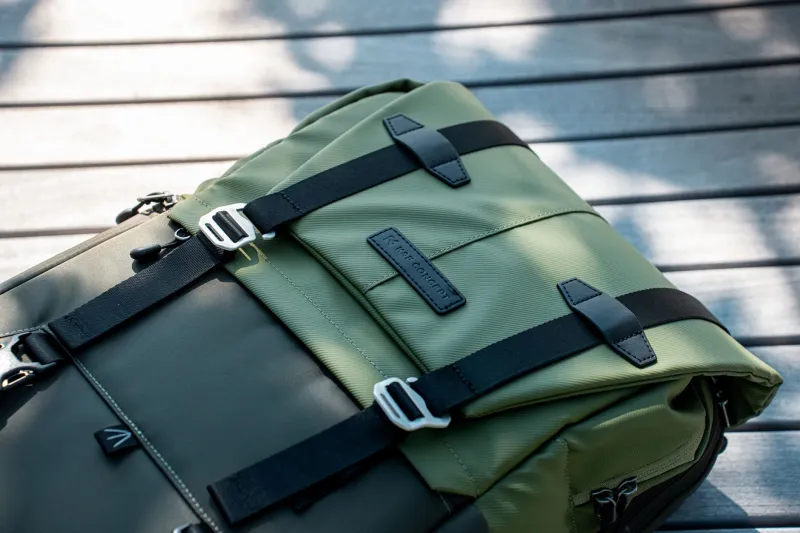
One practical test: look closely at the edges, straps and seams in the product photos. If the material is described as durable but the edges are raw and the stitching looks sparse, the description is doing more work than the construction. You do not need to be a materials scientist. You just need to be suspicious of adjectives with no noun behind them.
2. If it breaks, who fixes it?
Every bag will eventually need something. A zip pull snaps. A lining wears through at the corner. A strap anchor starts to look tired. The difference between a bag that lasts and a bag that ends up in a cupboard is often not the original price but whether it can be repaired without a drama.
Before you buy, ask what the brand offers in the way of repairs, spare parts or a warranty. Not every brand runs a repair service, and that is not automatically a dealbreaker — but it does change the calculation. If the answer is a shrug and a 30-day returns window, you are on your own after that. If there is a repair scheme, read the small print: what is covered, what is not, and who pays postage.
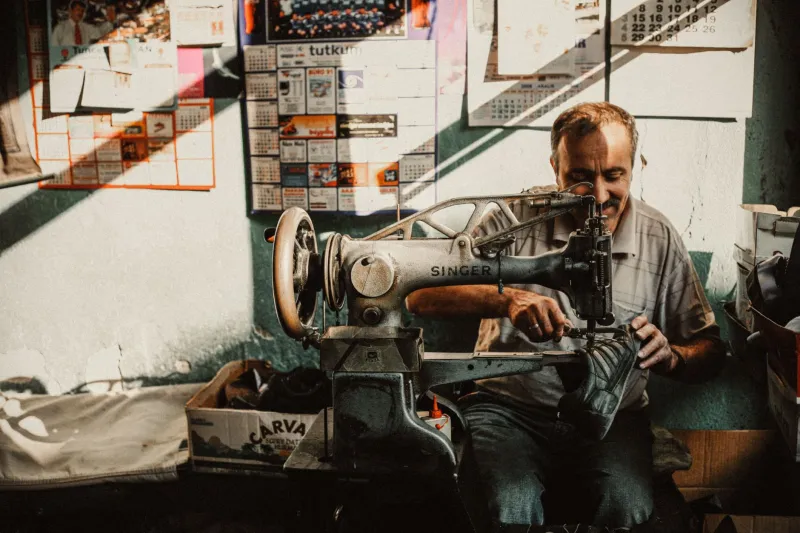
Then look at the bag itself. Can the zip be replaced? Is the lining stitched in a way that a repairer can access? Are the buckles and sliders a standard size, or a proprietary shape that will be impossible to source in three years? A local repairer can work wonders with leather, canvas and webbing, but they cannot magic a matching part out of thin air. Standard hardware is boring. Boring is good.
This matters most when the sale price is doing the talking. A £45 bag that needs a £60 zip replacement in year two is not a bargain; it is a delayed full-price purchase with extra hassle. A £120 bag that can be re-zipped, re-stitched and re-strapped for £25 is a different proposition entirely. The cheapest bag in the sale is rarely the cheapest bag over time.
3. Does it fit your actual Tuesday?
Most bag mistakes happen in the gap between the life you have and the life you imagine. The sale bag looks brilliant in a styled photo beside a coffee cup and a notebook. Your actual Tuesday involves a laptop charger, a reusable coffee cup that leaks a bit, a folded umbrella, and a commute that requires you to stand up quickly.
So measure. Check the internal dimensions against your laptop, not just the screen size. Think about whether you need to carry a water bottle upright, or whether a bulky coat will make a shoulder strap slide off. Consider the weight of the empty bag — a heavy bag is a tax you pay every day. Look at the pocket layout and ask whether it suits the way you pack: tidy compartments or one big void with a phone lost somewhere at the bottom.
And be honest about the strap. A thin strap on a loaded bag will cut into your shoulder. A short handle that only works in your hand is no good if you need your hands free on a packed train. If you cycle, walk a lot or use public transport, the carry system matters as much as the colour. A bag that looks right but carries badly will be left at home — and that is the most expensive outcome of all.
Finally, check the returns policy before you commit. Sale items sometimes come with shorter return windows or none at all. If you cannot try the bag on with your coat, fill it with your daily kit or walk around the room with it, you need the option to send it back without a fight.
The best bag in the sale is often the one you do not buy
There is a particular thrill in finding a reduced bag that seems to solve a problem. But the sale does not make a bag fit better, repair more easily or magically suit your commute. It just makes the decision feel more urgent.
If you are unsure, wait. Leave it in the basket. Close the tab. Go for a walk or make a cup of tea. If you are still thinking about it tomorrow — properly thinking, not just remembering the discount — then it might be worth another look. If the spell breaks as soon as the banner disappears, you have saved yourself more than the sale price.
A good bag should earn its place through years of quiet usefulness, not one afternoon of bargain excitement. That is not a very November-friendly message. It is, however, a very good way to end up with a bag you actually carry.