Measured, Not Marketed: Picking a Cabin Bag for UK Budget Flights
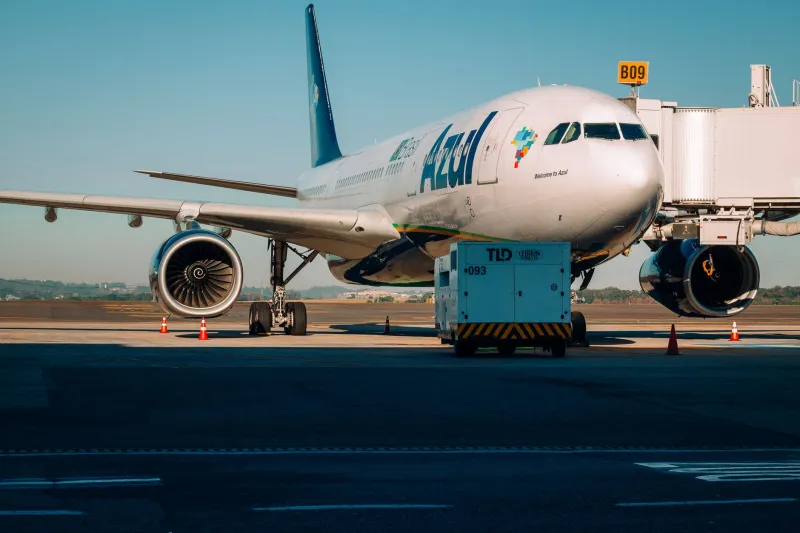
There's a particular silence that falls over a boarding queue when someone is asked to drop their bag into the metal frame. It's not quite shame. It's more the sound of a person recalculating a purchase they made months ago, in a kitchen, on a laptop, at eleven at night.
The bag said "cabin size". The frame disagrees. And the frame has the final say — not the listing, not the review, not the little badge on the product page that says "airline approved" in a font designed to imply legal certainty.
So let's talk about buying a cabin bag for British budget flying without the theatre. No bag that only fits when it's half empty. No fees for the sake of a two-centimetre handle.
What "cabin size" is actually promising
Almost nothing, on its own. The phrase gets used to mean three different things: the free underseat allowance, the paid larger cabin allowance, and whatever the manufacturer felt like measuring.
The free underseat bag is genuinely small. Ryanair's is 40 x 20 x 25cm; easyJet's is 45 x 36 x 20cm; Wizz Air's is 40 x 30 x 20cm. The paid cabin bag is closer to 55 x 40 x 20cm. Those numbers move around, and they're different again on the likes of Jet2 and Loganair, so check the airline's own page before you commit — not a comparison site, not a forum post from 2019.
Here's the part that catches people: a bag can be honestly described as "cabin approved" and still fail at the gate, because it was approved for a different airline's paid allowance. That's not a lie, exactly. It's marketing doing a runner from arithmetic.
The bits that actually get measured
Everything structural counts. Wheels, handles, the grab loop on top, the little padded panel on the back. They're all inside the frame, and they're all eating your centimetres.
A soft-sided bag listed at 55cm can measure 58cm once its wheels and top handle are in the equation. A tote listed as 40cm wide might be 43cm across the base once it's loaded. If you're buying for a specific airline, take the published limit and subtract two centimetres from every dimension before you start shopping. That's your real budget.
We've written before about how a bag's base decides its fate; the same logic applies here. A firm, flat base is what lets a bag sit square in the sizer instead of slumping into a shape that fits nobody's tape measure but its own.
Overstuffing is the quiet killer
The bag that fits empty is not the bag that fits full. A soft holdall with a 20cm depth figure will comfortably bulge to 26cm the moment you add a pair of trainers and a wash bag, and no amount of compression strap is going to argue with a metal frame.
Buy with headroom. If the limit is 20cm deep, look for something that measures 17cm before packing. If you're a chronic overpacker — and most of us are, on the way home at least — give yourself more.
The honest test is this: pack the bag the way you'll actually pack it, then measure it with a tape. Not the way the shop photographed it. Your way. With the hairdryer in.
Soft, structured, or somewhere in between
This is where taste and practicality start arguing.
A fully soft bag is the pragmatic choice. It squashes into an underseat gap, forgives a full flight, and never cracks. The trade-off is creasing and a certain rumpled look when you step off in a city you were hoping to impress. A soft tote with no structure at all will also sag across the base, which is miserable to carry for twenty minutes, let alone a day.
A fully structured bag — hard shell, moulded back, rigid frame — holds its shape beautifully and looks sharp on arrival. It also has zero give, which means if your packing is 5% ambitious, the frame will find out before you do.
The sensible middle ground, and where most good everyday bags sit, is a semi-structured build: a firm base panel, a padded back so it doesn't dig into you, and soft sides that will yield a centimetre or two without collapsing. It presents well and it negotiates.
The underseat problem is a height problem
Twenty centimetres is not a lot of height. Bags designed to lie flat — wide, shallow, with a top opening that runs the full length — are the ones that actually work under a seat, because you can get at your book and your charger without performing surgery on your neighbour's shins.
Avoid anything with a telescopic trolley handle if you're going underseat. The mechanism adds weight, adds height, and creates a rigid spine exactly where you need flexibility.
A blunt pre-purchase checklist
- Tape measure out. Check the manufacturer's dimensions against the airline's, and assume the listed figure excludes wheels and handles unless it explicitly says otherwise.
- Pack it before you trust it. If you're in a shop, ask to put your own coat and laptop in it.
- Weigh it empty. A 3kg bag before you've packed a thing is 3kg you'll resent at the check-in desk.
- Read the returns policy. Buy from somewhere that lets you send it back once you've measured it at home.
- Do the maths on fees. A paid cabin upgrade is usually cheaper than a gate penalty, and considerably cheaper than a bag you never use again.
The frank conclusion
The cabin bag market sells optimism. What you actually need is a bag that measures honestly, gives you a couple of centimetres of slack, and looks presentable enough that you're not apologising for it at the hotel desk.
Buy the smaller, better bag. Pack less. Measure it yourself, once, with a tape measure you already own — and then get on the plane without the little pause in the queue.